

Female Onyms in the Lexical Composition of Phraseological Units, Paroemias, and as Winged Words
https://doi.org/10.18384/2949-5008-2026-1-36-48
Abstract
Aim. To determine the role of a female image in figurative language devices: phraseological units, proverbs, and sayings, which are defined by the term paroemia.
Methodology. The subject of the study was the phraseological material, which consists of phraseological units, including phraseological expressions, catchphrases, and proverbs extracted from dictionaries of Russian phraseology, as well as dictionaries of proverbs and sayings. Such methods as observation, continuous sampling, statistical analysis, comparative analysis, as well as sociolinguistic, lexical-semantic, and historical-etymological analysis were used in both collection and analysis of the phraseological material.
Results. Sociolinguistic, lexical-semantic, and historical-etymological analysis was used to identify the reasons for using female images as lexical components, the sources of their formation, etymology, and semantics when studying lexical components in the composition of phraseological units, paroemias, and catchphrases, that are similar to well-known female names. It was found that myths, biblical legends, literary works, colloquial speech, movies, and popular television series are the main sources of female images in the lexical composition of phraseological units, as well as the origin of catchphrases. It has been noted that some female images have become common nouns with a metaphorical meaning. The semantics of phraseological units and proverbs containing female names as lexical components, as well as female names that have become catchphrases, is determined by various characteristics of women: appearance, personality traits, behavior in different situations, and their place and role in society.
Research implications. The studied phraseological units, catchphrases, and paroemias containing female onyms, which are recorded in dictionaries and reference books of the Russian language, enrich the theory of linguoculturology and sociolinguistics, and also outline the prospects for a systematic study of similar linguistic units in synchrony and diachrony in order to identify trends the formation of new words and meanings, catchphrases, idioms, and proverbs. Such linguistic units allow us to determine the role of proper names in enriching the vocabulary and phraseology of the modern Russian literary language, and they are also of great importance for lexicography.
About the Author
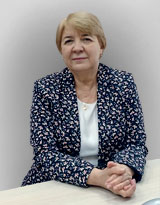
E. I. Beglova
Nizhny Novgorod Academy of the Ministry of Internal Affairs of Russia
Russian Federation
Russian Federation
Elena I. Beglova – Dr. Sci. (Philology), Prof., Prof., Department of Foreign Language and Culture of Speech, Nizhny Novgorod Academy of the Ministry of Internal Affairs of Russia; Honorary Worker of Higher Professional Education in the Russian Federation
Nizhny Novgorod
References
1. Dzhanumov, S. A. (2014). Folk Proverbs and Sayings in the Letters of A. S. Pushkin from 1832 to 1836. In: Bulletin of Moscow Region State University. Series: Russian Philology, 3, 79–84 (in Russ.).
2. Zhilina, Yu. S. (2021). National and Cultural Specificity in Proverbs and Sayings of Russian Germans Containing Realia. In: Herald of Tver State University Series: Philology, 4 (71), 78–85. DOI: 10.26456/vtfilol/2021.4.078 (in Russ.).
3. Nikitina, T. G. (2023). Russian Proverbs in the Modern Speech: Towards the Concept of Complex Lexicographic Representation. In: Philology. Theory & Practice, 16 (11), 3654–3658. DOI: 10.30853/phil20230561 (in Russ.).
4. Nikitina, T. G. & Rogaleva, E. I. (2022). Russian Proverbs in Linguistic and Axiological and Lexicographical Interpretation: Traditions and Innovations. In: Russian Journal of Lexicography, 24, 70–92. DOI: 10.17223/22274200/24/4 (in Russ.).
5. Mokienko, V. M. & Nikitina, T. G. (2022). The Slavic World in Paroemia Interpretation: Axiological Dominants and Their Linguistic and Cultural Representation. St. Petersburg: St. Petersburg State University publ. (in Russ.).
6. Beglova, E. I. (2023). The Image of a Russian Woman through the Prism of Phraseologisms and Texts of Small Speech Genres. In: Vestnik of Lobachevsky University of Nizhni Novgorod. Series: Philology, 2, 206–213. DOI: 10.52452/19931778_2023_2_206. DOI: 10.52452/19931778_2023_2_206 (in Russ.).
7. Beglova, E. I. (2025). The Role of Paremia in Literary Texts of Different Historical Periods. In: Social and Humanitarian Knowledge, 11 (1), 88–101. DOI: 10.18255/2412-6519-2025-1-88-101 (in Russ.).
8. Koroleva, I. A. (2022). Speech Portrait of a Modern Russian Woman: An Onomastic Component. In: Vestnik of Immanuel Kant Baltic Federal University. Series: Philology, Pedagogy, Psychology, 3, 36–43 (in Russ.).
9. Safonova, S. S., Chupryakova, A. A. & Zamaljutdinova, E. R. (2017). The Name of a Woman in the Russian Phraseological System. In: Philology and Culture, 4 (50), 84–89 (in Russ.).
Review
Views:
217
JATS XML





 Email this article
